The debut collection · Essays from Sicily
Before It
Becomes Normal
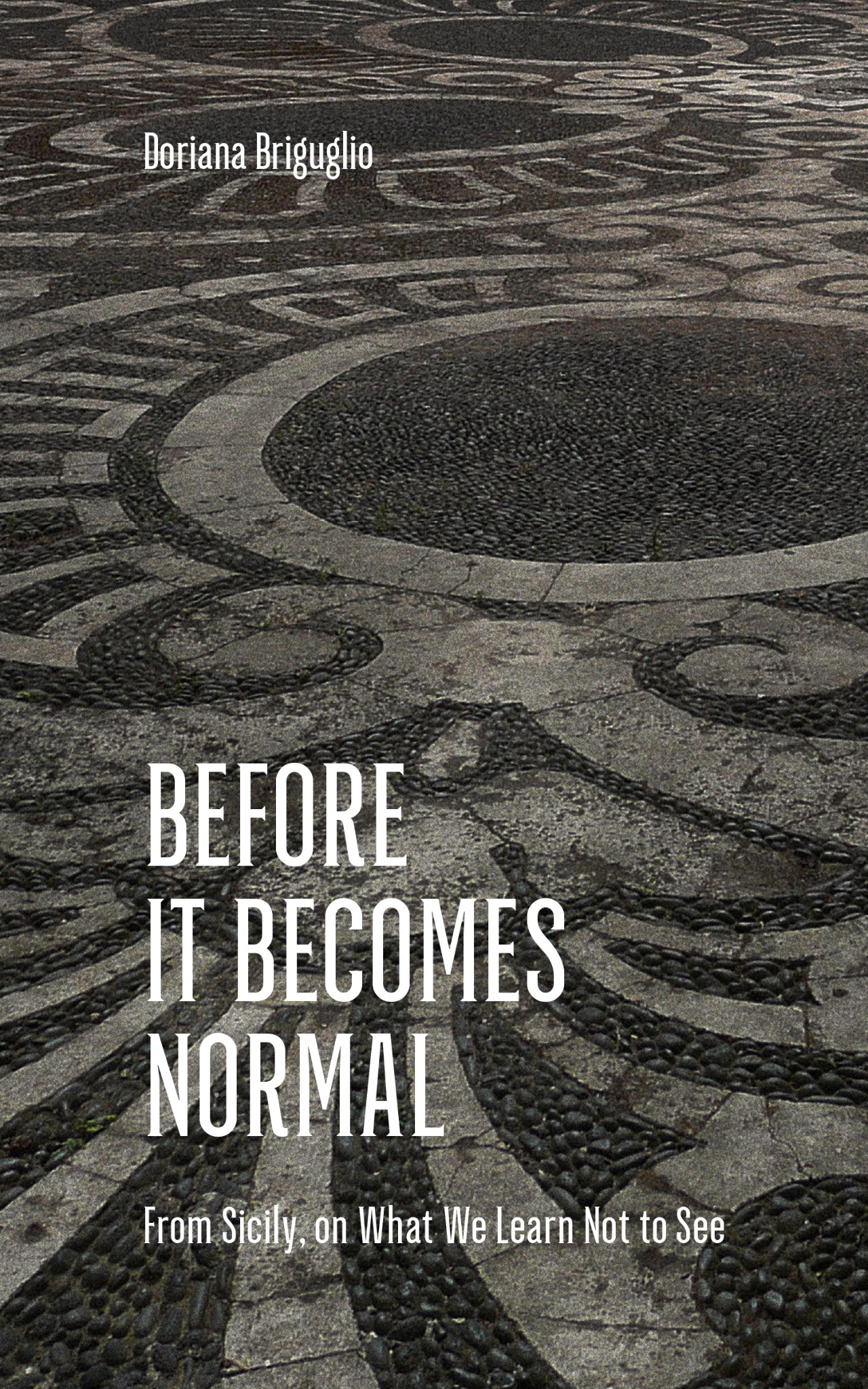
From Sicily, on What We Learn Not to See
Fifteen essays about an island, everyday life, and what we gradually learn to overlook. A personal invitation to look again.
From Sicily, on What We Learn Not to See
Fifteen essays about an island, everyday life, and what we gradually learn to overlook. A personal invitation to look again.
Enzo shifts behind me. “You’re thinking again,” he says.
“I’m always thinking. The façades,” I say. “They’re instructions.”
He laughs. “Instructions for what?”
“How to be seen.”
This is what the centro storico teaches, if you pay attention. The space arranges people before they know they’ve been arranged. Wide piazzas for gathering, narrow streets for intimacy, churches anchoring each square like punctuation. And at night, when the shops close and the traffic thins, the Baroque stops being history and becomes atmosphere.
So I stayed silent and watched him work.
The kitchen was his battlefield. His eyes moved quickly, scanning space and sequence; his hands moved more slowly, deliberately, navigating flames, knives, fresh pasta, raw meat, reductions. His large body was engaged in a kind of restrained dance, every movement necessary, nothing ornamental. The music was the percussion of pots, burners, cutlery. In that narrow space, he was the soloist, supported by a minimal corps de ballet: a woman sous-chef and a male waiter.
Unusual serving plates were lined up on a makeshift pass—the kitchen table itself. He had chosen classic porcelain, the kind you inherit or receive as a wedding gift. It was a gesture of respect toward the diners, and a discreet form of coquetry.
On the night of July 25, those notes drifted
among the millenary stones of the Greek Theatre in Syracuse. They moved slowly, crossing the folds of the night and settling somewhere inside the audience.
The stage was bare. Only a piano, violin, cello. The strings accompanied without ever overpowering, as if they knew they were guests. In the darkness, everyone was free to give the music a private meaning.
I caught myself holding my breath. Watching my thoughts come and go. Looking at my children, then at the faces around me, searching for a reflection. I wondered whether everyone, like me, was travelling somewhere. We were alone, but together.
The ruins felt awake.
Illustrative quotes · fictional names
“It made me look again at the things I had stopped noticing — in Sicily, and much closer to home.”
“A Sicily beyond the postcard. These essays stayed with me long after I finished reading.”
“Thoughtful, intimate, and quietly unsettling. A book that invites you to slow down and pay attention.”
He looked again, this time without the phone. “I was here years ago,” he said. “It felt looser.”
She nodded. “It was.”
“And now?”
“Now it’s easier to read.”
He smiled, as if trying to understand whether that was an answer.
“There was a small shop,” he continued. “Antiques, sort of. Though it didn’t feel like a shop exactly. They had things outside—ceramics, tools, pieces of wood, all slightly out of place. It made the whole corner… recognisable.”
She nodded.
“I was trying to find it this morning.”
“It’s gone,” she said. “It used to be there for decades.”
A brief pause.
“Yes. There’s something else now. Very clean. The window is almost empty.”
She didn’t react.
“I thought I had the wrong street,” he added. “But I didn’t.”
“No.”
“I bought something there,” he said. “Nothing important. But I remember the man wrapping it in paper, taking his time. It felt like… part of the place.”
He stopped, as if the sentence had gone further than intended.
“And now it’s just…” He gestured vaguely. “Aligned.”
The shadow of the closed gate stretches toward the cluster of ruined buildings ahead. There is a narrow gap at the side. We exchange a quick glance, step through, and suddenly find ourselves on the main road of the old town.
We stop without knowing why.
For a brief moment, the road comes alive.
Children in shorts run after one another, shouting. Some kick a worn-out metal rim; others invent games whose names no longer exist. Two couples cross the street and greet each other warmly. A group of men stands on the pavement. Women sit outside their front doors, talking.
It lasts only a second.
Then the image dissolves.
What remains is silence.
No cars. No voices. No movement.
This is old Poggioreale.
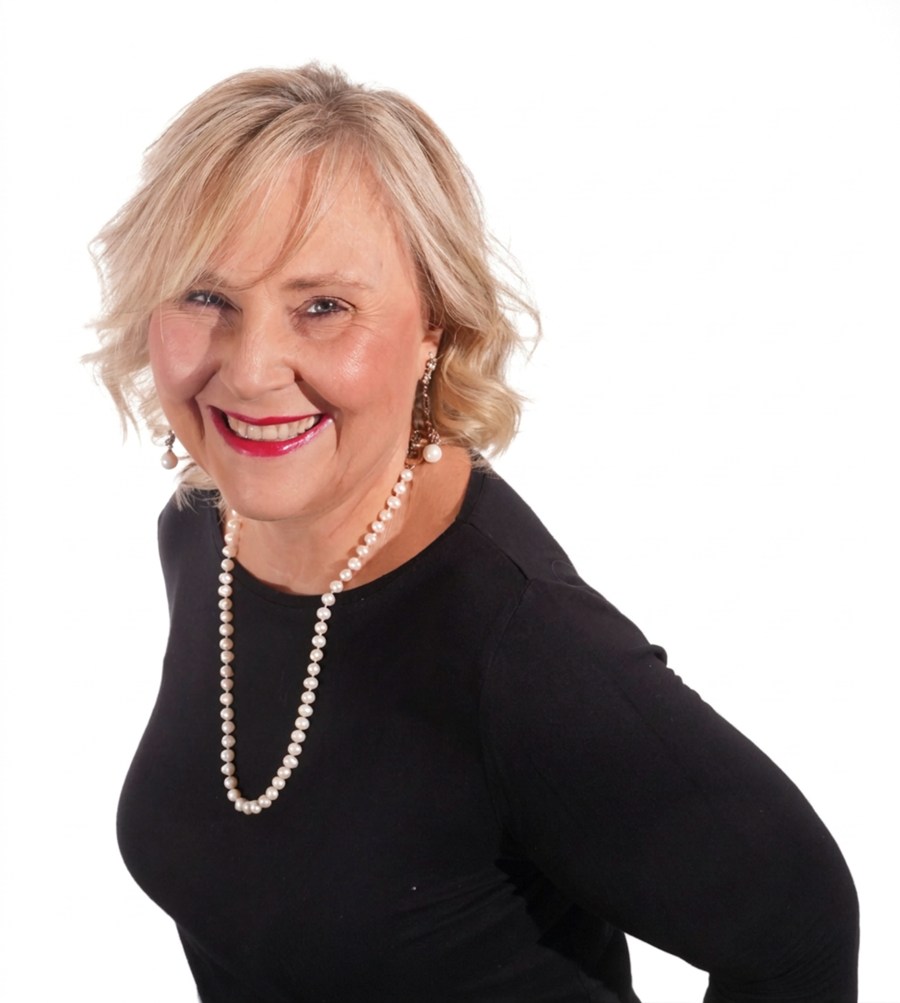
“Planning journeys taught me how much a small detail can change the way we experience a place.
Writing has made me pay closer attention to the details we pass over in everyday life.”
I was born in Sicily and have spent more than twenty-five years working in travel across the island and the Mediterranean. My work has taken me from cities to remote landscapes and into places most visitors see only briefly. Over the years, I’ve come to pay attention to the work that keeps those places going, the decisions that shape them, and the compromises people gradually learn to live with.
I write from within that experience.
Sicily is where I first began to ask what we stop noticing when something becomes familiar, and what we come to accept as a result. Those questions stay with me beyond the island, and I hope readers will recognise them in the places and experiences that shape their own lives. They run through Before It Becomes Normal, my first book in English.
Explore the book ↗For questions about the book, interviews, reading groups, or literary events.
Questions, reflections, and conversations about Before It Becomes Normal.
Interviews, readings, and invitations.